
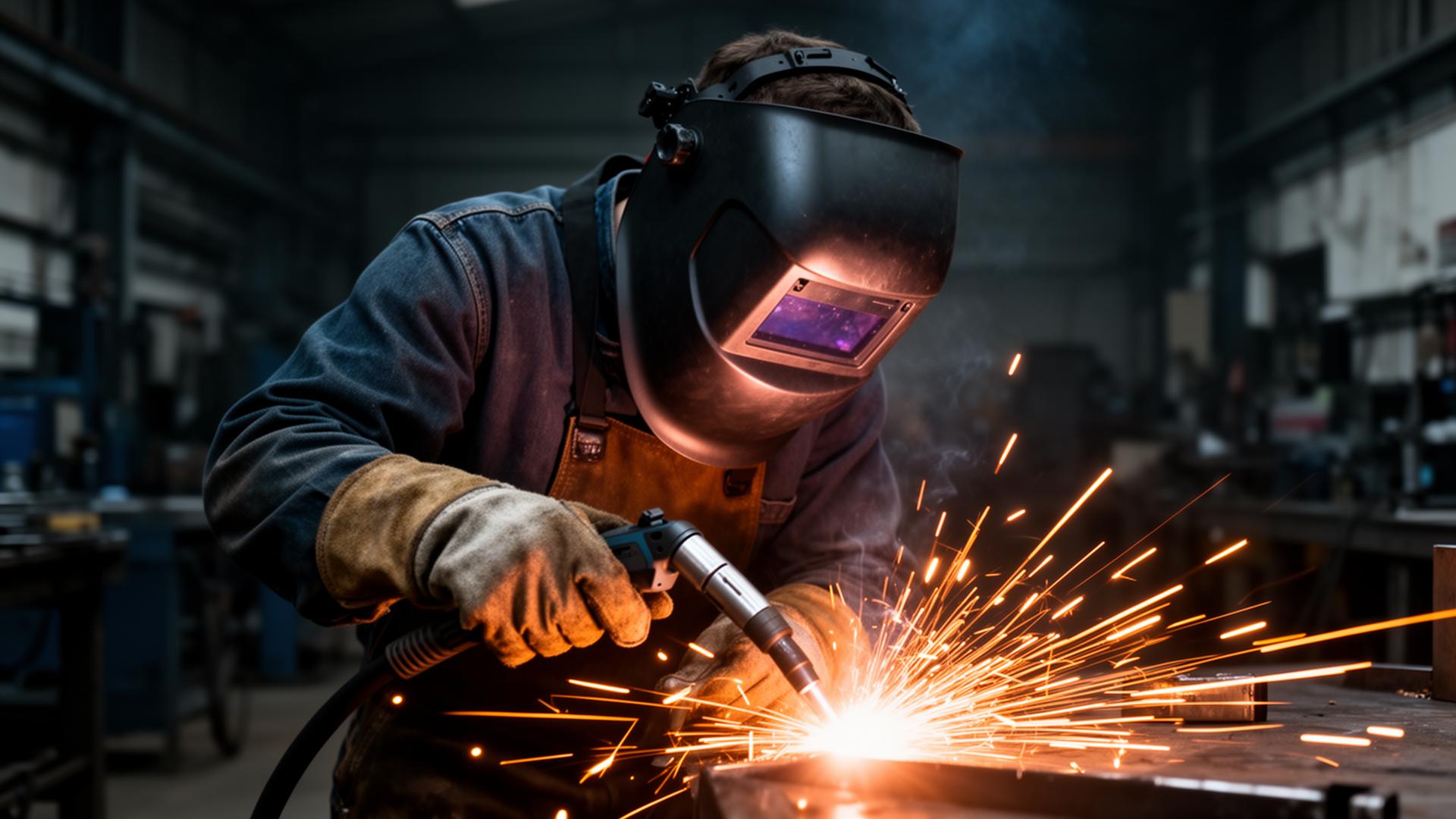
Pontoon boats dominate Lake Havasu for good reason — stable, spacious, and easy to beach. But those same aluminum logs take a beating: electrolysis pinholes from dock power, impact dents from beaching on rocky shorelines, and cracked welds at cross-member brackets after years of wave slap. The good news — most pontoon damage is repairable. The bad news — a standard boat shop often treats pontoons like monohulls and misses the construction details that matter.
Why pontoon logs fail differently
Pontoon tubes are typically 5052-H32 or 5086-H116 aluminum — softer and more corrosion-resistant than 6061, but easier to dent and harder to weld cleanly if they're oil-contaminated from the factory baffle sealer. Log walls are thin (0.080–0.125 inch) and supported by internal baffles every few feet. A crack or hole near a baffle is a stress point; a repair that doesn't tie into the baffle area will flex and re-crack.
Common pontoon damage and how to fix it
Find every leak — not just the obvious one
Pull the boat and pressurize each log individually (a simple shop-air fitting in the drain plug works). Spray soapy water along the log and look for bubbles. Pinhole leaks from electrolysis often cluster near the waterline on the side that faces the dock. Beaching dents show up as flat spots on the bottom or leading edge. Mark every spot with paint pen — there are almost more than you think.
Electrolysis pinholes: grind, weld, and re-seal
Electrolysis pinholes are caused by stray DC current in the marina or dissimilar metal contact (stainless brackets, bronze through-hulls, or a neighbor's bad ground). The damage looks like a cluster of tiny craters, usually on the outside of the outer log.
- Grind the area back to bright metal 2 inches past the cluster — use a flap disc that's never touched steel.
- V-groove each pinhole so the weld reaches full penetration on thin log walls.
- TIG weld with 5356 filler and AC balance set for cleaning — 5052/5086 oxidizes fast.
- Keep heat low and move fast. Overheating a thin log wall will warp it inward against the baffle.
- Grind flush, then seal with a marine-grade aluminum epoxy or barrier coat compatible with your bottom paint.
Critical: If the pinholes are inside the log (you see water in the hull when you drain it but no exterior bubbles), the leak may be at a baffle weld or a transom bracket bolt. Interior baffle repairs usually require cutting an access port or pulling the log — not a DIY job.
Beaching dents and impact damage
Beaching on Lake Havasu's rocky shoreline puts flat spots and creases in the log bottom. Small dents (under 6 inches, no crack) can sometimes be pushed out from inside by removing a drain plug and using a rounded tool. But most beaching damage includes a crack at the edge of the dent — that's a weld repair.
For cracked dents: grind the crack out completely, hammer the dent back to round as best you can, then TIG weld the crack with 5356 filler. If the dent area is too thin from stretching, cut a doubler patch from matching 5052 or 5086 sheet, bevel the edges, and weld it over the repair. A doubler on a log is almost always better than trying to fill a stretched-thin area.
Bracket and cross-member cracks
The brackets that connect the logs to the deck and cross-members are high-stress joints. After years of wave impact and trailering vibration, the welds at these brackets fatigue and crack. The symptoms: a soft feeling in the deck, a visible crack at the bracket base, or a bracket that has shifted slightly.
This is a structural repair, not cosmetic. The bracket must be fully supported during welding (jack stands under the log and the deck frame) so nothing shifts. Grind the old crack out, re-weld the bracket with full-penetration TIG, and add a gusset plate or doubler if the original bracket design was light. We almost always add a gusset at bracket repairs — it's the difference between a repair that lasts one season and one that lasts ten.
Reassembly, pressure test, and anode check
After welding, pressure-test each log again before the boat goes back in the water. Fix any new pinpoints that show up — heat from welding can expose nearby weak spots. Replace all zinc or magnesium anodes (even if they look half-good) and check your marina's dock wiring for stray current. If electrolysis caused the original damage and you don't fix the source, the pinholes will come back within a season.
When to call a pro instead of DIY
Pontoon logs are deceptively simple — round tubes, thin walls, easy access. But the internal baffles, factory sealers, and thin-gauge alloys make them easy to warp, contaminate, or under-penetrate. Bring it to a TIG-certified aluminum welder if:
- The leak is inside the log or at a baffle — needs access port cutting or log removal
- The crack runs along a longitudinal seam — factory seam failures need engineered repair
- There's a beaching dent larger than a dinner plate or with multiple radiating cracks
- A deck bracket or cross-member is cracked or loose — structural and safety-critical
- You've already tried epoxy or JB-Weld and it failed — contamination will ruin a proper weld
Our approach: pontoon-specific TIG repair
We repair pontoon logs and tubes on Lake Havasu year-round. Every repair gets proper alloy-matching filler (5356 for 5052/5086 logs), controlled heat to prevent warping thin walls, and a pressure test before we hand it back. For bracket repairs we add gusset plates; for beaching damage we use doubler patches. We also check your anode setup and give you an honest answer on whether the damage is worth repairing or if replacement is the smarter long-term call.