
Pitting on an aluminum hull looks like a scatter of small craters — sometimes the size of a pinhead, sometimes deep enough to see daylight through. Left alone, those pits get deeper every season until the hull leaks or a structural rib lets go. The good news: shallow pitting is fixable. The bad news: most "quick fixes" sold online won't hold on a boat that actually sees water.
Why aluminum pits in the first place
Pitting is almost always galvanic corrosion or electrolysis — two dissimilar metals (your aluminum hull and a stainless bolt, bronze through-hull, or a miswired bilge pump) sitting in water and eating each other. Saltwater accelerates it. Stray DC current in a marina multiplies it.
Step-by-step pit repair
Find and mark every pit
Pull the boat, pressure wash, and let it dry. Walk the hull in good light and circle every pit with a paint pen. You're looking for clusters around fasteners, sacrificial anodes that are gone, and any spot near electrical penetrations.
Grind back to bright metal
Aluminum oxide forms instantly and won't bond to anything. Use a carbide burr or a flap disc dedicated to aluminum (never one that's touched steel) and grind each pit until you see shiny silver across the entire crater and 1/2" around it.
Choose your fill method by pit depth
- Cosmetic pits under 1mm: a marine-grade aluminum epoxy works and is the easiest DIY option. It's not structural — it's filler.
- Pits 1–3mm in a non-structural area: aluminum solder (the brazing-rod style — "fill pitted aluminum with solder" videos online) can work if the metal is genuinely clean and you hit the right temperature with a propane or MAPP torch.
- Anything deeper than 3mm, anywhere below the waterline, or near a rib/transom: stop. This is a TIG weld repair. Filler and solder will fail the first time the hull flexes.
Apply the fill
For solder: pre-heat the area evenly, touch the rod to the metal (not the flame) — if it doesn't flow on its own, the base isn't hot enough. For epoxy: mix per the can, press it into the cleaned pit, slightly proud of the surface.
Fair, prime, and protect
Sand flush with 120 then 220 grit. Prime with a self-etching aluminum primer, then top with a barrier coat compatible with your bottom paint. Replace your sacrificial anodes — if the old ones are gone, that's why you have pitting.
When to call a pro instead
We get a lot of boats in the shop where a previous owner filled deep pitting with epoxy or solder, splashed it, and watched water find its way through within a season. If any of these are true, skip the DIY and bring it to us:
- Pits deeper than 3mm, or you can flex the metal around them
- Pitting on a transom, rib, or any seam — these are load-bearing
- Pits clustered around a through-hull or fastener — likely active galvanic corrosion
- Any visible cracks running between pits
Our approach: TIG with proper prep
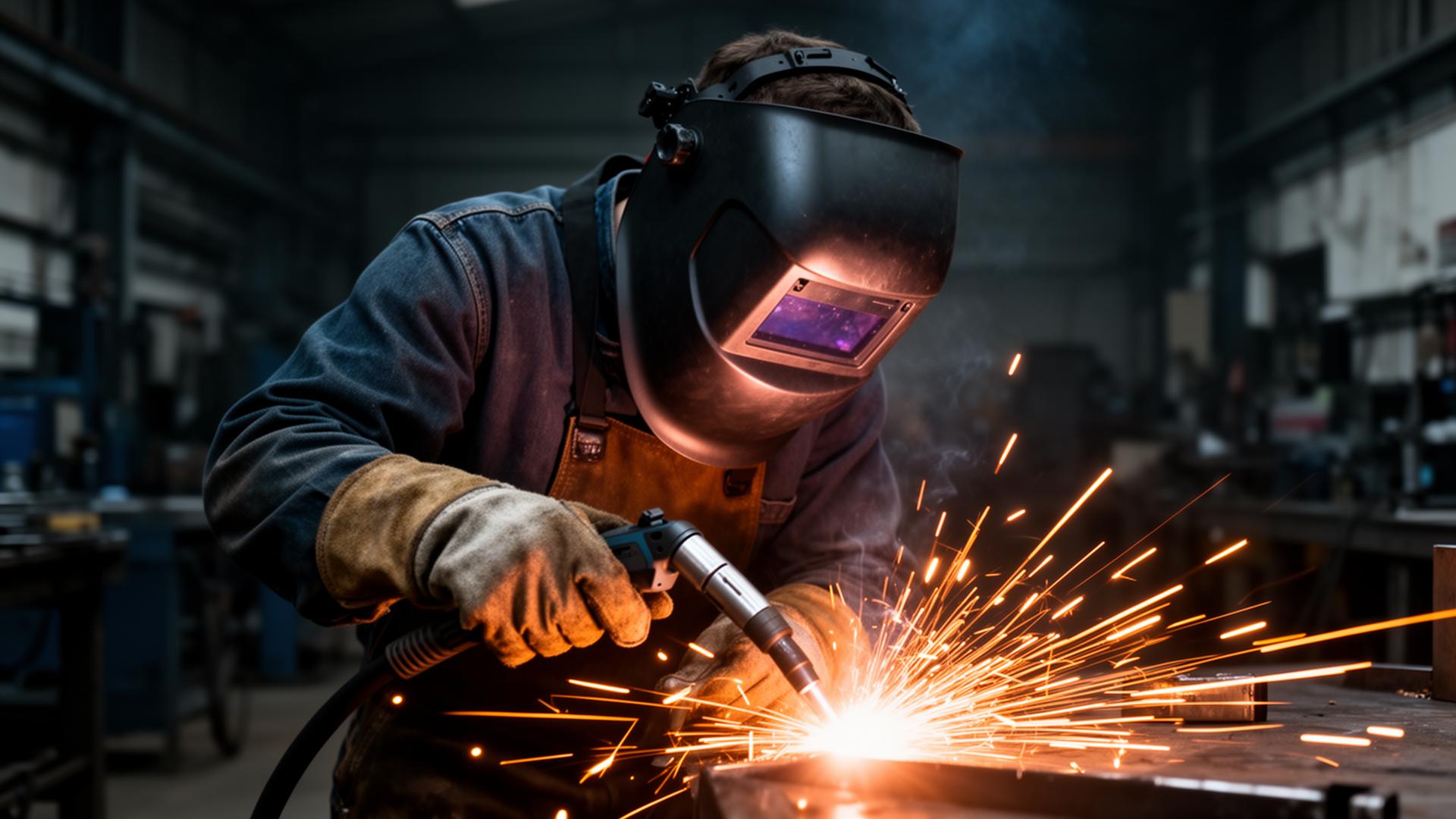
For deep or structural pitting we grind the affected area back to clean parent metal, cut a doubler plate from matching alloy, and TIG weld it in. The result is a hull section that's stronger than the original and won't pit through again in the same spot.