
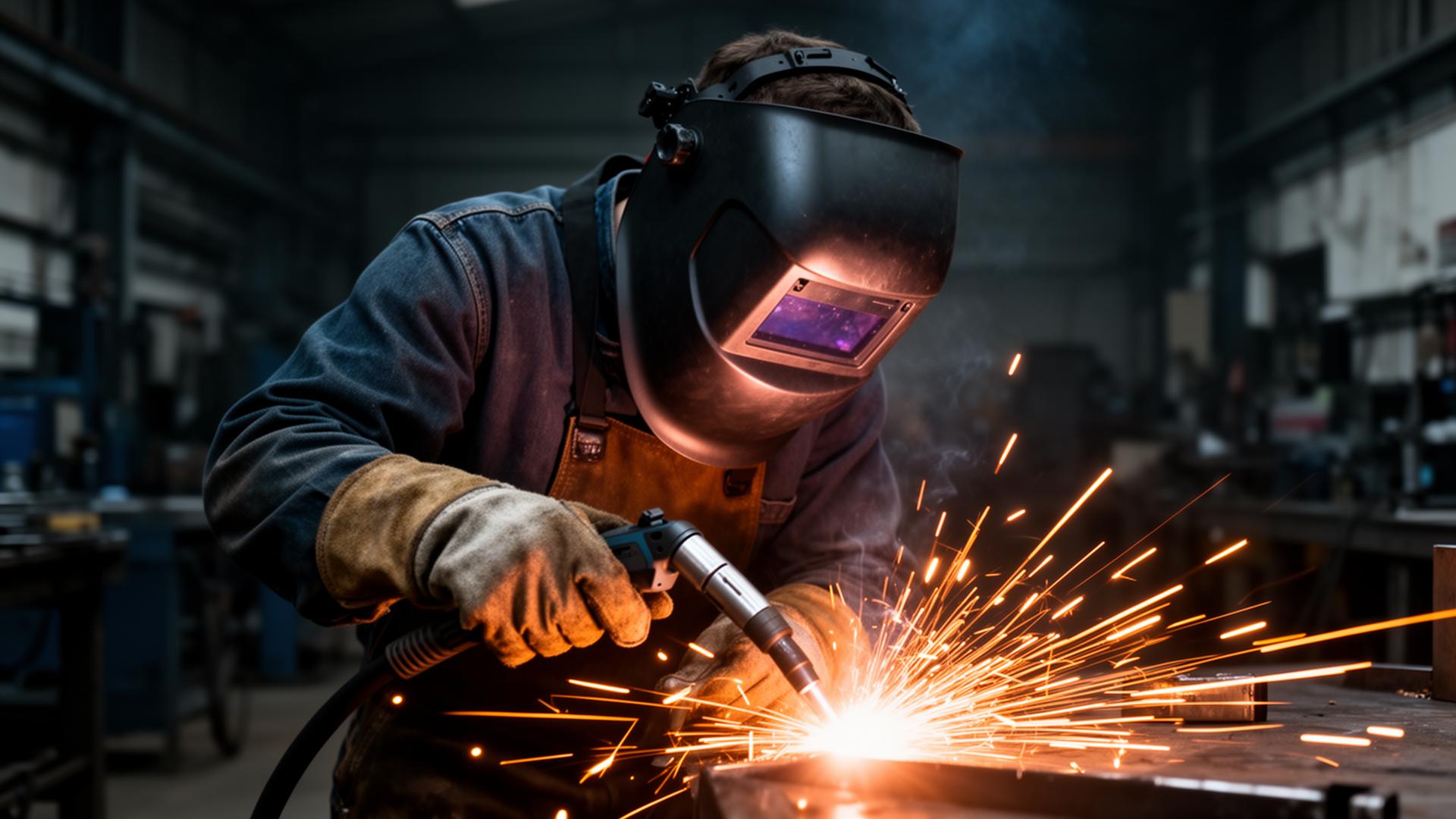
Aluminum trailers are lighter and rust-free compared to steel, but they fail in their own ways: stress cracks at welded joints, galvanic corrosion where steel hardware bolts through the frame, and fatigue at the axle mounts after years of bouncing down rough boat ramps and washboard desert roads. The good news — almost every aluminum trailer is fixable. The bad news — most "boat trailer welding" you'll find at a roadside shop is steel-grade work on aluminum and won't hold a season.
Why aluminum trailers crack where they do
Aluminum has roughly 1/3 the fatigue resistance of steel. Every bump cycles the frame. Cracks start at stress risers — sharp inside corners, old weld toes, bolt holes — and propagate fast. Pair that with galvanic corrosion from zinc-plated steel bolts soaked in lake water and you get the classic pattern: cracks radiating out of corroded fastener holes near the axle.
Step-by-step trailer repair
Inspect the whole frame, not just the obvious crack
Pull the trailer off the boat or load, jack it up, and walk every weld with a flashlight. The crack you can see is usually one of several. Pay close attention to:
- Axle mount plates and U-bolt brackets — top and bottom of each leaf-spring hanger
- Crossmember-to-main-rail joints, especially the two crossmembers ahead and behind the axle
- Tongue / coupler welds
- Winch stand mount and bow stop riser welds
- Any spot a steel fastener passes through the aluminum
Drill-stop active cracks before you tow it anywhere
Find the end of each crack and drill a 1/8" hole right at the tip. This relieves the stress concentration and stops the crack from growing while you get the trailer to a welder. Do not skip this — a crack discovered on Friday turns into a separated frame by Sunday's ramp run.
Remove every steel bolt in the cracked area
Steel hardware in aluminum is the most common cause of repeat failure. Pull each bolt, inspect the hole for white aluminum-oxide corrosion, and plan on replacing with stainless or aluminum hardware plus a nylon or HDPE isolation washer when you reassemble.
Grind back to bright metal — and only aluminum tools
Use a flap disc or carbide burr that has never touched steel. Steel contamination embedded in aluminum will cause porosity and rust-through within months. Grind 1" past the visible crack on each side and V-groove the crack itself so the weld reaches full penetration.
TIG weld with 5356 filler — and add a doubler at fatigue points
Boat-trailer extrusions are typically 6061-T6 or 6063-T5. Both weld cleanly with AC TIG and 5356 filler (5356 is stronger and more salt-resistant than 4043 for marine trailers). The weld itself loses temper in the heat-affected zone, so for any axle-area repair we cut a matching aluminum doubler plate, taper its edges, and TIG it over the original weld. The result is stronger than factory and spreads load past the heat-affected zone.
Reassemble with isolated hardware and re-torque
Stainless or aluminum bolts, isolation washers under every steel-on-aluminum contact surface, and a dab of marine-grade anti-seize on the threads. Re-torque U-bolts after the first 50 miles — the new weld and fresh hardware will settle.
When to bring it in instead of fixing it yourself
We see a lot of trailers in the shop where a previous owner had a roadside welder MIG it with steel wire ("it's metal, it'll hold") or stick-weld an aluminum extrusion. Both fail immediately. Bring it to us if any of these apply:
- Multiple cracks within a few feet — usually a sign the whole zone is fatigued
- Anything on the axle mount, leaf-spring hanger, or main rail under the axle
- Cracks running through extruded box-section rails — needs doubler plate, not bead-fill
- Previous "repair" with MIG steel wire, stick rod, or epoxy
- Tongue or coupler welds — these are life-safety joints
Our approach: TIG, doublers, and isolated hardware
Every trailer repair we do gets pre-heat control on heavy sections, full-penetration TIG with 5356 filler, and a doubler plate at any fatigue-prone joint. We replace steel hardware with stainless plus isolation washers before sending the trailer back so the galvanic-corrosion cycle doesn't restart.